Most Discord servers for creatives are graveyards within six months. You join, there's a burst of activity, a few people post their work, someone asks a question that doesn't get answered, and then it goes quiet. The channels fill up with bot messages and the occasional "is anyone still here?" that nobody responds to.
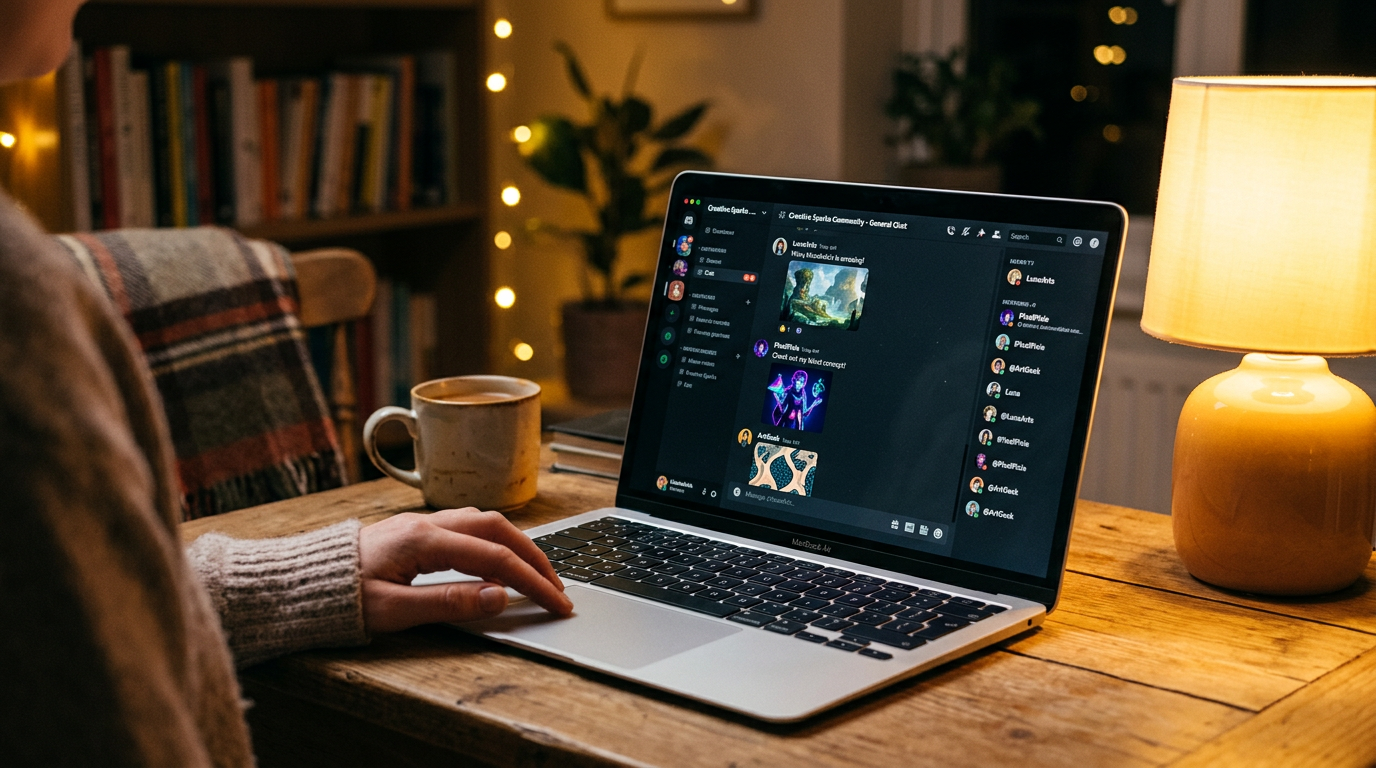
A few are genuinely alive. I've been in three that I'd describe that way, and I've been trying to figure out what they have in common. It's not the size — one of them has 200 members and one has 4,000. It's not the niche — they cover completely different creative fields. It's something structural, and I think I've finally figured out what it is.
The Difference Is Friction
The dead servers have no friction. You join, you're immediately in every channel, you can post anything anywhere. The alive servers have just enough friction to make participation feel meaningful. You have to introduce yourself before you can post work. There's a channel for feedback that requires you to give feedback before you can receive it. The roles are earned, not automatic.
This sounds counterintuitive — why would you want to make it harder to participate? But the friction is what creates investment. When you've had to do something to be part of a community, you're more likely to stay and contribute. The calitoy community thinking around this is interesting: the best creative collectives have always had some form of initiation, even if it's just "show us what you're working on."
The other thing the alive servers have is a clear purpose that isn't just "a place for [type of creative] to hang out." That's too vague. The best ones have a specific thing they're doing together — a weekly challenge, a shared project, a critique format that everyone knows and uses. The purpose gives people a reason to show up on a specific day, not just whenever they feel like it.
The Moderation Question
The alive servers also have active moderation, which sounds obvious but is actually rare. Most server owners set up the channels and then disappear. The servers that work have someone who's genuinely present — not policing, but participating. Asking questions. Responding to posts. Making introductions between members who should know each other.
I've seen this in the women building things spaces especially — the ones that work have a host energy, not just an admin energy. Someone who's genuinely invested in the community thriving, not just in the server existing.
The youth culture and online spaces angle is interesting here too. Gen Z builds community differently — more ephemeral, more voice-based, less attached to the idea of a permanent server. The Discord servers that work for younger creatives tend to be smaller and more intimate, with voice channels that actually get used.
The formula, as far as I can tell: small enough to know people, big enough to have variety. Enough friction to create investment. A specific shared purpose. An active host. That's it. It's not complicated. It's just rare.
More on creative community at Calitoy Community.